- The Cada Global Newsletter
- Posts
- Most Businesses Plan for One Future. That's the Problem | Cada Global Newsletter - April 2026
Most Businesses Plan for One Future. That's the Problem | Cada Global Newsletter - April 2026
Monthly insights for business leaders and SME owners, covering strategy, risk management, and the tools we build.

Dave Adamson
April 01, 2026


The newsletter also features popular, created, and curated content, as well as occasional updates on tools being used or evaluated, and the Cada Global applications, GetRiskManager, the Strategic Analysis Toolkit, DogWalkerPro, MealPlanGenius and the Local Weather Chrome Extension.
Please share this information with others if you feel they would benefit from it.
You can also read this and previous newsletters; others can subscribe by following the subscribe link below.
This Month
This Issue's Lead Article: Most Businesses Plan for One Future. That's the Problem
From our Blogs: Year One Survival: Frameworks Every Founder Needs
From other Blogs (Worth Reading): The 7-Step Guide to Better Healthcare SEO

Most Businesses Plan for One Future. That's the Problem

Most Businesses Plan for One Future. That's the Problem
Why ‘What-if’ is Your Most Important Skill
In 2007, Netflix CEO Reed Hastings posed a question that seemed absurd: What if people stopped wanting DVDs through the mail?
His DVD business was thriving, but Hastings didn't just ask the question; he acted on it, investing in streaming years before it seemed necessary. When the market shifted, Netflix was ready. Blockbuster, which never asked that what-if question, filed for bankruptcy in 2010.
This wasn't luck. It was disciplined what-if thinking, the most critical skill a business strategist can develop.
So, the question now is: where will your business be in the future?
What Makes ‘What-if’ Thinking Powerful
What-if thinking isn't idle speculation. It's the rigorous practice of projecting alternative scenarios, challenging assumptions, and exploring potential futures before they arrive.
The best strategists don't just imagine possibilities; they map dependencies, estimate probabilities, identify early warnings, and develop contingent responses.
Why It Matters Now
Disruption cycles have compressed. Technologies that once took decades to reach mass adoption now do so in months. Business models that seemed unassailable crumble overnight.
The COVID-19 pandemic proved this: companies that had asked, 'What if our workforce had to work remotely?' adapted in days. Those who dismissed such scenarios spent months catching up.
The winners weren't smarter; they asked better 'what-if' questions.
Four Critical Applications
Strategic planning: build strategies robust enough to succeed across multiple futures, not just one predicted path
Risk management: identify vulnerabilities before they escalate into crises by systematically exploring edge cases and failure modes
Innovation: breakthrough ideas emerge by challenging fundamental assumptions. What if customers wanted access, not ownership? That question created Uber
Decision-making: map decision trees, understand your actual risk exposure, and determine whether you need more information or need to act and adapt
How to Develop the Skill
Schedule regular scenario-exploration sessions. Build diverse teams that challenge shared blind spots. Create psychological safety so people can raise uncomfortable possibilities. Use frameworks such as pre-mortems (what if this failed?) and second-order thinking (and then what happens?).
Pitfalls to Avoid
Don't let endless exploration prevent action. Balance upside and downside scenarios and avoid catastrophising. Make what-if thinking ongoing, not a one-off exercise. Most importantly, act on your insights. Scenarios without action are a waste of time.
Your Next Step
Here's your challenge: identify one major decision you're facing. Spend 30 minutes asking what if it succeeds beyond expectations? What if it fails? What if your key assumptions are wrong? Work through the implications and develop contingency responses.
In a world of accelerating change, the most critical skill isn't having the correct answers; it's asking the right what-if questions before everyone else does.
The future belongs to those who ask better what-if questions than their competitors. Your expertise gets you in the game, but what-if thinking keeps you ahead.
Year One Survival: Frameworks Every Founder Needs
The romanticised image of a startup founder is a dangerous trap. It often depicts a visionary who just somehow knows what the market needs, builds a product in a garage fueled by caffeine, and wakes up a year later to a billion-dollar valuation. However...

Year One Survival: Frameworks Every Founder Needs
To find out more, read the full article here.
The 7-Step Guide to Better Healthcare SEO
SEO is a powerful marketing channel for healthcare providers. Use this guide to get found on search.

The 7-Step Guide to Better Healthcare SEO
To find out more, read the full article here.

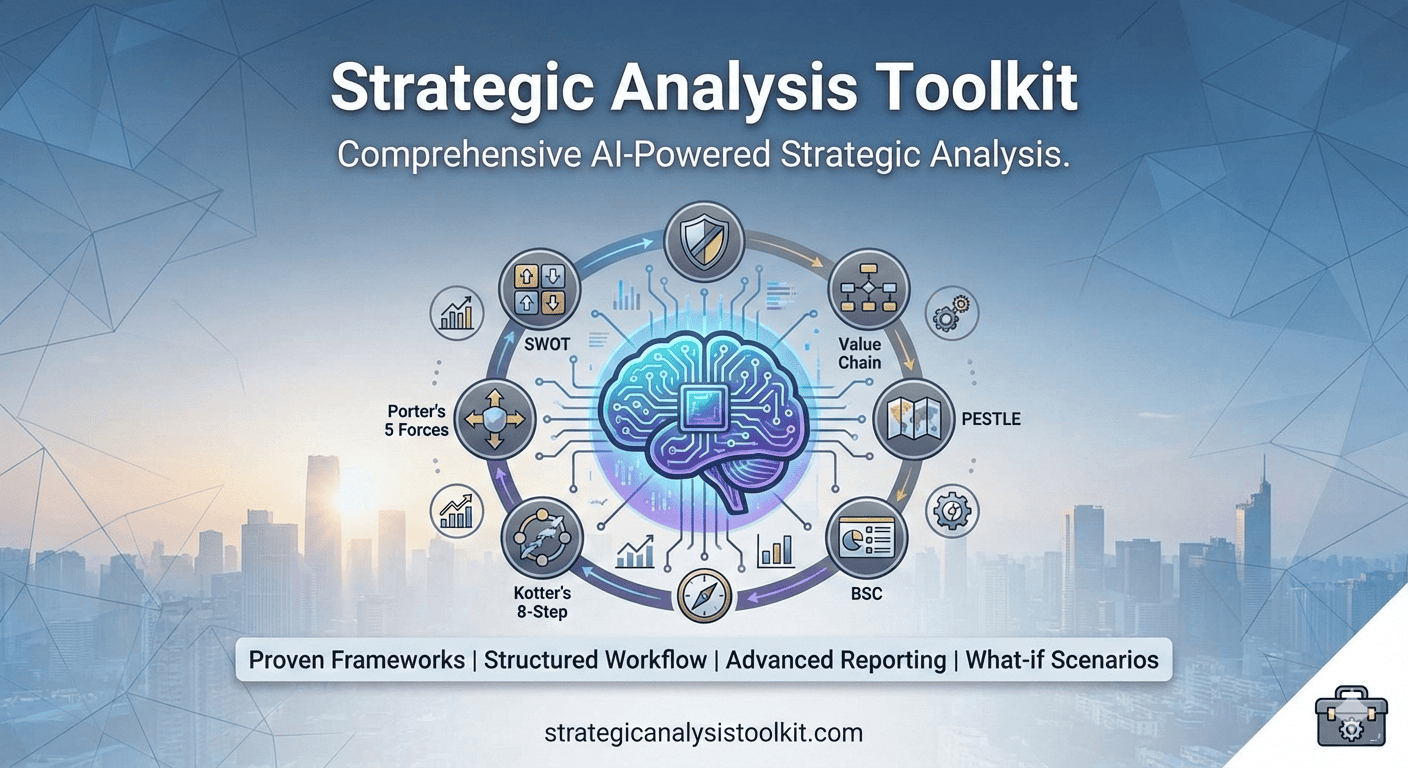
Strategic Analysis Toolkit
GetRiskManager

DogWalkerPro

MealPlanGenius

Go To Local Weather

1
Reply